LTE Fundamentals
How the all-IP mobile network of 3GPP Release 8 onwards works, from the radio to the evolved packet core. You will learn why LTE was built, how its radio, channels and protocols carry data, how the core attaches phones and sets up bearers with their quality of service, and how mobility, voice, SMS and LTE-Advanced work on the road to 5G.
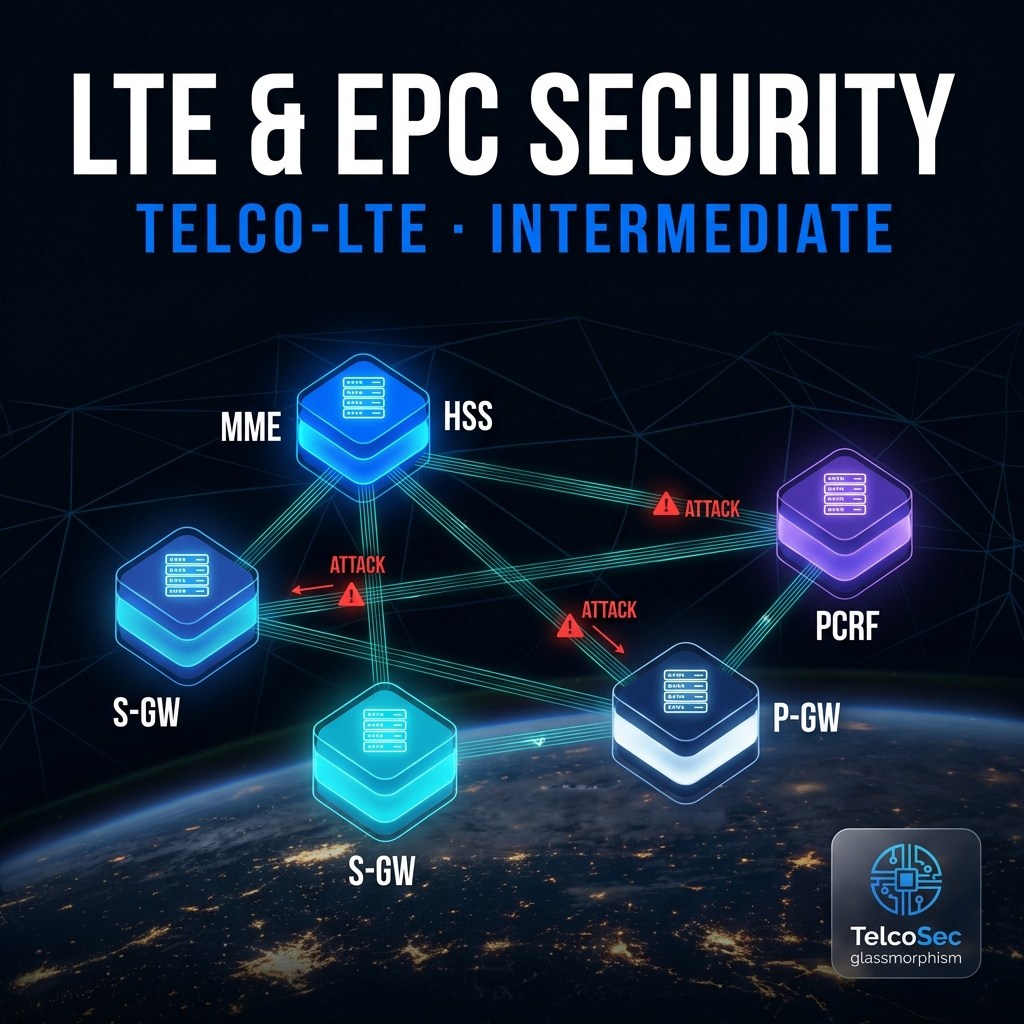
LTE Fundamentals is the first course of the Mobile Network Analyst path, LTE then 5G, and is taken after the Telecom Foundations path, building on Telecom Fundamentals and GSM Fundamentals. It starts with the move from GSM and UMTS to LTE: why 3GPP built an all-IP system, the requirements behind it and the Evolved Packet System of E-UTRAN and evolved packet core. It then follows the LTE radio with OFDMA, SC-FDMA, frames, frequency-division and time-division duplexing and the bands; the physical channels and cell search; and the radio protocol stack from PDCP, RLC and MAC to RRC, HARQ and scheduling. Later modules cover the evolved packet core with the MME, S-GW, P-GW, HSS and PCRF and the GTP tunnels between them; attach, with the NAS identities, authentication as a procedure and the default bearer; bearers and QoS, from QCI and ARP to traffic flow templates and policy control; and mobility in idle and connected mode, from tracking area updates and paging to X2 and S1 handover. The last modules cover voice and SMS through CS fallback, VoLTE over the IMS and SMS over SGs, and LTE-Advanced with carrier aggregation, MIMO, LTE-M, NB-IoT and dual connectivity on the road to 5G. The course ends with an interactive review, "Switch-on to first data session".
>>> Clearance required
Unlock with Professional
This content is included with the Professional plan.
View plansLTE Fundamentals Badge
Passing the final exam earns the LTE Network Engineer achievement and counts towards the TelcoSec Mobile Network Analyst certification, which needs the LTE Fundamentals and 5G Fundamentals final exams. It shows you can explain how LTE works from the OFDMA radio and its protocol stack to the evolved packet core, attach and bearers, mobility, voice and LTE-Advanced.