PSTN-101Level Beginner
COURSES

PSTN Fundamentals

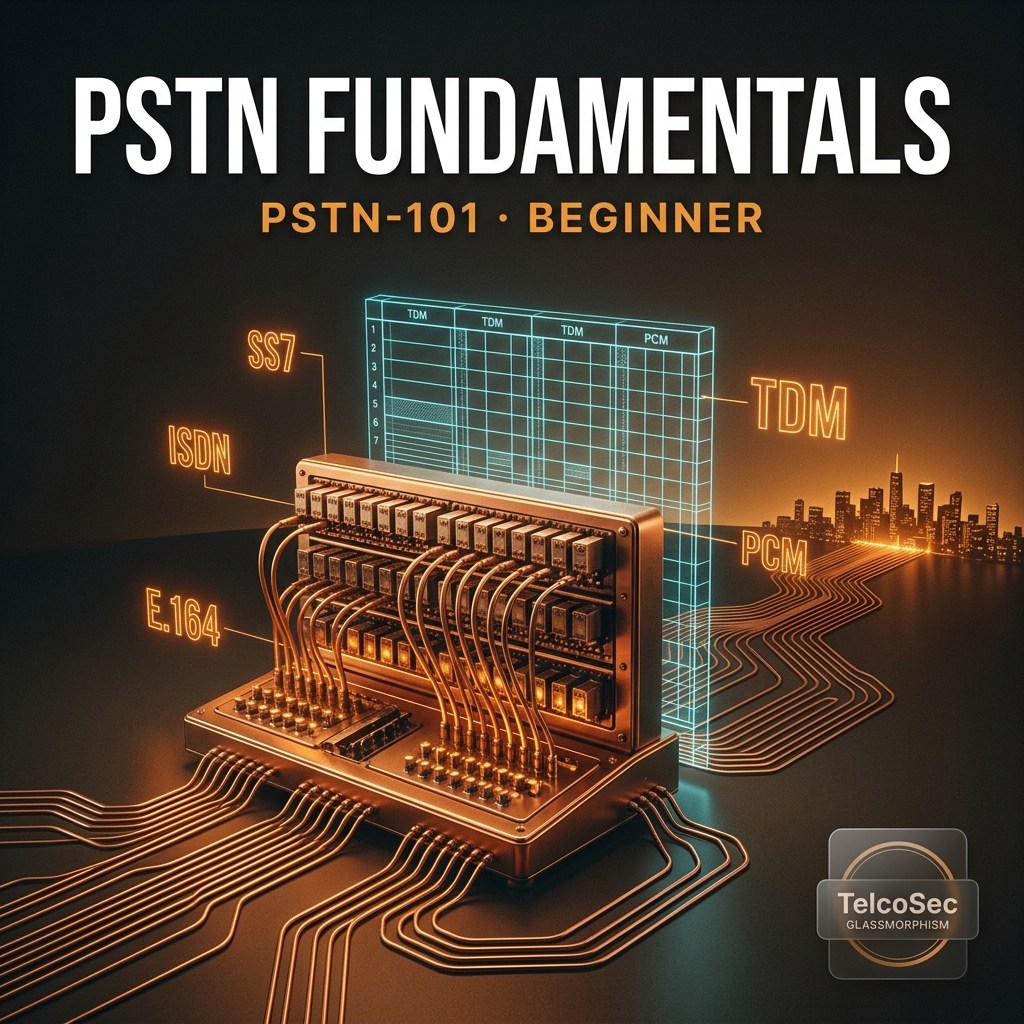
How the fixed public switched telephone network carries a voice call from one telephone to another, anywhere in the world. You will learn how subscriber lines, digital exchanges, numbering, signalling and interconnection work together to set up, carry and bill a call.
TelcoSec Academy
Telecom Foundations
PSTN-101
PSTNSubscriber lineDTMFDigital exchangeTime-space-time switchingE.164Number portabilityCASR2SS7/C7ISUPIntelligent NetworkISDNCDRMedia gatewaySIP-I
Overview

PSTN Fundamentals is the second course of the Telecom Foundations path and builds on Telecom Fundamentals. It follows a telephone call end to end: from the subscriber line and the local exchange through digital switching, numbering and routing, channel-associated and SS7/C7 signalling, intelligent network services and interconnection between operators, to the media gateways and IP networks that are replacing circuit switching today. The course ends with an interactive review that follows a national call from off-hook to release.

Learning Objectives
Describe the architecture of the PSTN, from local exchanges through transit layers to international gateways
Explain how the subscriber line powers, rings and signals an analogue telephone, including DTMF dialling
Explain how a digital exchange switches 64 kbit/s channels using time-space-time switching under stored program control
Describe how E.164 numbers, national numbering plans and number portability steer routing decisions
Trace signalling from channel-associated signalling and CCITT R2 to the SS7/C7 network of signalling points, transfer points and point codes
Follow an ISUP call from set-up to release and describe the Intelligent Network services built on SS7/C7
Describe enterprise voice, ISDN access, call detail records and settlement, and how media gateways, SIP-I and IMS carry PSTN calls over IP
Prerequisites
Telecom Fundamentals

>>> Clearance required

Unlock with Professional

This content is included with the Professional plan.

View plans
Career Outcomes
01Trace a fixed-network call across local, transit and international exchanges and name what each layer does
02Read ISUP call flows and E.164 routing decisions in the terms used by switching and interconnect teams
03Explain how call detail records drive billing and settlement between operators
04Start the ADSL, GSM and SS7 courses with the fixed-network grounding they assume
PSTN Fundamentals Badge
Completion Badge

PSTN Fundamentals Badge

Passing the final exam earns the PSTN Network Engineer achievement and counts towards the TelcoSec Telecom Foundations certification, which needs the final exams of all five Foundations courses: Telecom, PSTN, ADSL, GSM and SIM Cards Fundamentals. It shows you can explain how the fixed network carries a call from the subscriber line through digital exchanges, numbering and SS7/C7 signalling to interconnection and billing.

RequiredThe achievement is awarded for passing the PSTN Fundamentals final exam: 75 questions drawn from a bank of 150, with 70% needed to pass. Attempts are unlimited, with a 7-day wait between attempts. The module quizzes are practice and do not award the achievement on their own.