SIP Fundamentals
How calls and other sessions are set up, changed and ended over IP with the Session Initiation Protocol. You will learn how SIP, SDP and RTP work together, from user agents and proxies through registration, offer/answer and media to NAT traversal, interworking with the PSTN and SIP in the IMS for VoLTE and VoNR.
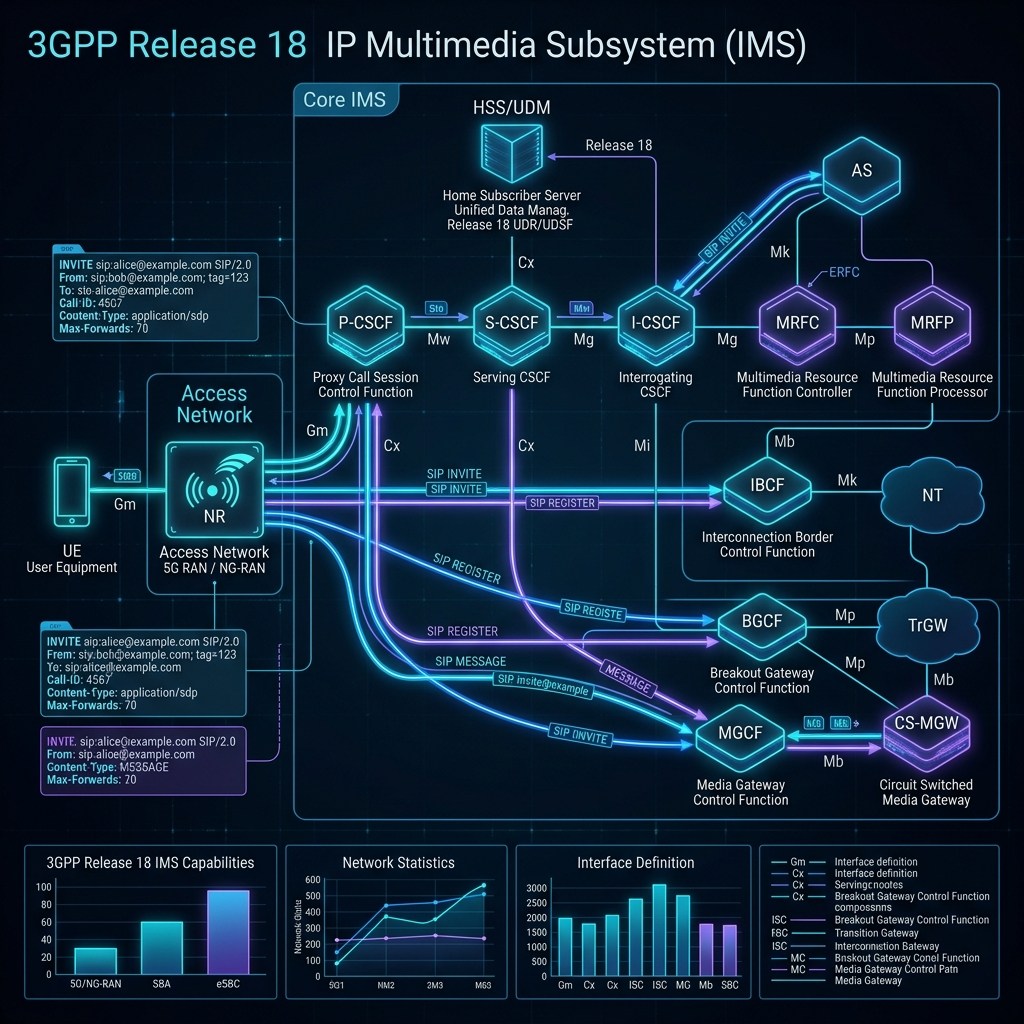
SIP Fundamentals is the second course of the Telecom Signaling Analyst path and builds on the Telecom Foundations path and on SS7 Fundamentals, where calls were set up with ISUP over circuits. It starts with the move from circuit-switched to IP voice: the building blocks of a voice-over-IP system, the road from H.323 to SIP and the RFC 3261 family of standards. It then follows the SIP architecture of user agents, proxies, registrars, redirect servers and back-to-back user agents with their SIP and tel URIs, the messages, methods, status codes and header fields, and the transactions and dialogs that hold a call together. Later modules cover registration and the location of servers in the DNS, session descriptions in SDP and the offer/answer model, RTP, RTCP and codecs, and the NATs and network edges a call crosses. The last modules connect SIP to the telephone network through ISUP interworking and SIP trunks, and to mobile networks through the IMS, VoLTE and VoNR. The course ends with an interactive review that follows one VoLTE-style call from registration to release.
>>> Clearance required
Unlock with Professional
This content is included with the Professional plan.
View plansSIP Fundamentals Badge
Passing the final exam earns the SIP Session Engineer achievement and counts towards the TelcoSec Telecom Signaling Analyst certification, which needs the SS7 Fundamentals and SIP Fundamentals final exams. It shows you can explain how SIP, SDP and RTP set up, change and end calls over IP, from user agents and proxies to NAT traversal, PSTN interworking and SIP in the IMS.